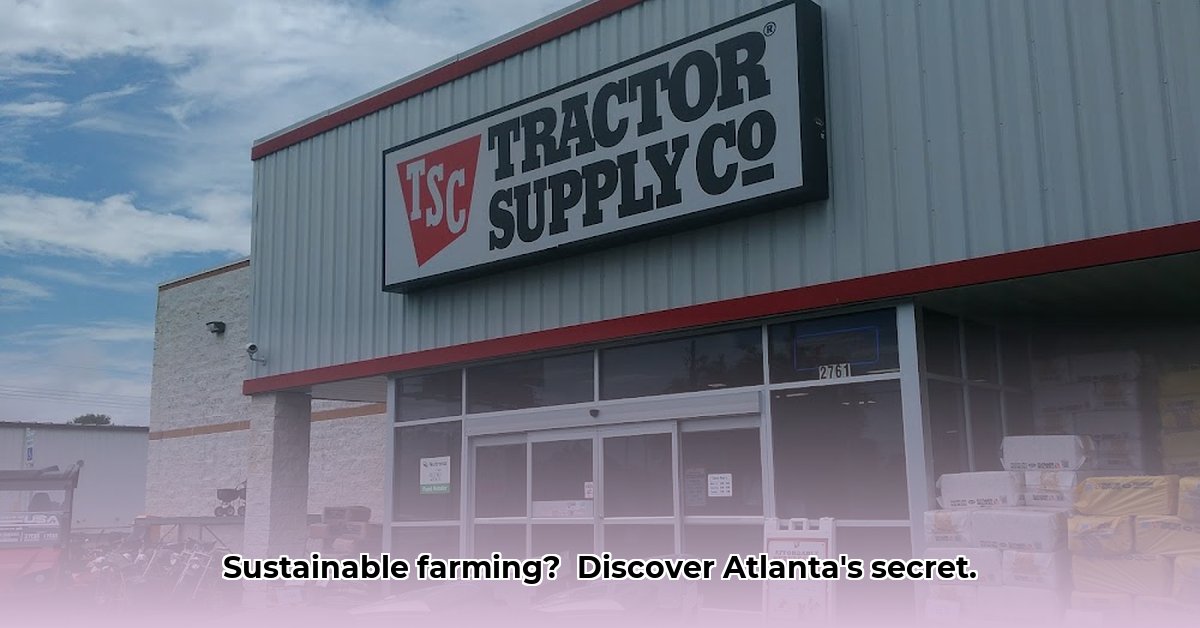
Tractor Supply (TSC) in Atlanta, Texas, serves as a vital resource for local farmers, providing a wide range of agricultural supplies. But in an era of increasing focus on sustainable agriculture, how effectively does TSC contribute to environmentally conscious farming practices? This article explores TSC's role, highlighting both its current contributions and its considerable potential for future growth in supporting sustainable farming in the region. For examples of similar initiatives, see this Texas TSC location.
TSC's Product Offerings and Accessibility: A Rural Lifeline
TSC in Atlanta offers an extensive inventory, from tractor parts and animal feed to fencing and tools. While not explicitly categorized by sustainability, many products indirectly support eco-friendly practices. For instance, water-efficient irrigation systems, crucial for water conservation, are readily available. Similarly, certain fertilizers and pest control solutions can contribute to a holistic approach to farming. However, the lack of a dedicated "sustainable farming" section limits visibility. Do you find it easy to locate organic options among the vast inventory?
This accessibility is a significant advantage, especially in rural areas with limited options, minimizing travel time and fuel consumption – a silent contribution to sustainability. "The convenience of having everything in one place is invaluable," says Sarah Miller, a local farmer in Atlanta. "It saves me time and money, which allows me to invest more in sustainable practices."
TSC's Current Contribution to Sustainable Agriculture: Unlocking the Potential
While TSC doesn't actively promote its role in sustainable agriculture, many of its products are utilized by farmers to support eco-friendly practices. For example, the availability of drought-resistant seeds allows farmers to adapt to changing climate conditions. However, the connection between TSC's offerings and sustainable agriculture isn't clearly communicated. This presents a substantial opportunity for TSC to educate its customers and expand its role. Is this lack of clear communication hindering the adoption of sustainable farming techniques?
The impact of TSC’s existing offerings could be significantly enhanced by clear labeling and promotion of eco-friendly products.
Potential for Future Growth: A Roadmap for Sustainability
Growing TSC's contribution to sustainable agriculture requires a multi-pronged approach involving stakeholders across the agricultural landscape.
Supply Chain Audit: Conducting a comprehensive audit of TSC's supply chain is crucial to identify areas for improvement, from packaging materials to transportation methods. This includes analyzing the carbon footprint of products.
Farmer Engagement: Actively engaging farmers through surveys and focus groups will provide invaluable insights into their needs and preferences for sustainable products. Adapting to their needs is essential for success.
Strategic Partnerships: Collaborating with companies specializing in sustainable agricultural products will broaden TSC's offerings and expertise, expanding their range of eco-friendly options.
Product Line Expansion: Actively curating and promoting a selection of products explicitly linked to sustainable farming practices – certified organic seeds, compost-friendly tools, and reduced-impact pest control – is crucial for effective outreach.
Improved Communication: Clear and consistent communication to consumers about TSC's commitment to sustainability is paramount, educating customers and solidifying TSC's position as a leader in the field.
Actionable Steps: A Collaborative Effort
The transition toward sustainable agriculture requires a coordinated effort.
- TSC: Invest in supply chain optimization and expand its selection of explicitly labeled, sustainable products.
- Farmers: Actively seek out and utilize sustainable products available at TSC and other sources.
- Government: Provide incentives and support for sustainable agricultural practices and businesses supporting such practices.
- Consumers: Demand transparency and support businesses committed to ethical and sustainable practices.
Conclusion: Harvesting a Sustainable Future
Tractor Supply Company holds a unique position to positively influence sustainable agriculture in rural areas like Atlanta, Texas. By proactively implementing the strategies outlined above, TSC can significantly enhance its contribution to the transition towards a more environmentally responsible and economically viable agricultural future. The potential for growth is substantial, benefiting not only farmers and the environment but also TSC’s brand position and bottom line. Will TSC seize this opportunity to become a leader in sustainable agricultural solutions?